
Call: 07971891212( PIN:983)
 Send Inquiry
 Send Inquiry
HDD (Horizontal Directional Drilling)
HDD (Horizontal Directional Drilling) Specification
- Pullback Force
- Varies by model, typically 10-300 kN
- Drilling Method
- Directional Drilling
- Mud Pump Rating
- High-pressure for efficient borehole cleaning
- Max Thrust Force
- Varies by model, typically 10-300 kN
- Safety Systems
- Emergency stop, overload protection, alarms
- Rotary Torque
- 2,500-10,000 Nm (model-dependent)
- Automation
- Manual and semi-automatic controls
- Hydraulic System Pressure
- 350-400 bar (model-dependent)
- Pipe Diameter Range
- 50 mm to 1200 mm or more
- Maximum Drilling Depth
- Up to 150 meters or higher
- Control System
- Digital and analog controls, operator cabin options
- Machine Weight
- Approx. 7-15 tons depending on configuration
- Environmental Compliance
- Meets latest emission standards
- Power Source
- Diesel Engine
- Track Type
- Steel or rubber tracks for mobility
- Main Features
- Low environmental impact, minimal surface disruption, suitable for urban areas
- Type
- Horizontal Directional Drilling (HDD)
- Max Drill Pipe Length
- Typically 3-6 m
- Application
- Trenchless pipe and cable laying
- Drive Type
- Crawler Mounted
HDD (Horizontal Directional Drilling) About
Valued as the trusted manufacturer and exporter, we are providing to our clients a highly advanced Horizontal Directional Drilling Machine. All these machines are widely used for providing efficient and fast drilling facilities. By using these drilling machines, users can drill their bores according to their depth requirements. Many functional components are integrated to these machines for improving their overall performance. Moreover, clients can avail our Horizontal Directional Drilling Machine in different capacities and specifications.
Features:
- Long operational life
- Require less maintenance
- Technically assorted
Further Details:
An Auger Boring Machine (ABM) is used to bore horizontally through soil or rock with a cutting head and auger. The majority of ABMs are used to install pipe casing under railroads, highways, airport runways, creeks or any area of ground that cannot be open cut or disturbed in any way.
There are many types of cutting attachments for this machine. They range from Backhoe Teeth cutters for cutting through soil to the Robbins Small Boring Unit for boring hard rock
The machine bores through the earth with a cutting head and the jacking force is provided by the hydraulic thrust. The pipe casing and auger sections are added as the machine advances. Spoil is removed from the auger through the casing to a door located on the side of the machine.
The majority of the crossings are 80 ft (24.4 m) to 225 ft (68m) long; however some drives have been over 600 ft(180 m) in length. The length of the drive depends on the ground conditions.
The machine can excavate sand, gravel, clay, and rock of any type. With the Robbins Small Boring Unit, the Auger Boring Machine (ABM) can excavate rock faster in small diameter drives than any other method available.
Efficient Trenchless Technology for Urban Projects
HDD (Horizontal Directional Drilling) enables the installation of pipes and cables beneath existing structures without surface disruption. This technology is particularly suitable for urban environments, where minimizing public inconvenience and preserving surface integrity are critical. HDD machines improve productivity and reduce restoration costs due to their non-invasive process.
Robust Performance Across Diverse Conditions
Equipped with crawler-mounted drive, HDD rigs handle varied terrain and challenging urban landscapes. Their thrust and pullback force ranges (10-300 kN) and rotary torque capacity (2,500-10,000 Nm) enable operators to tackle a range of pipe diameters and lengths, supporting projects with up to 150 meters drilling depth.
Prioritizing Safety and Environmental Compliance
Safety is ensured through integrated emergency stop features, overload protection, and clearly annunciated alarms. The hydraulic systems operate at high pressures (350-400 bar) while maintaining compliance with the latest emission standards-demonstrating a commitment to environmental stewardship alongside operational efficiency.
FAQ's of HDD (Horizontal Directional Drilling):
Q: How does horizontal directional drilling (HDD) work for trenchless pipe and cable laying?
A: HDD operates by drilling a pilot bore along a predetermined path beneath the surface, guided by advanced controls for directional accuracy. After the pilot bore, the hole is enlarged to accommodate the required pipe or cable, which is then pulled back through the bore, resulting in minimal surface disruption and efficient installation.Q: What types of projects and conditions are best suited for HDD machines?
A: Horizontal Directional Drilling is ideal for urban utility installations, especially where surface restoration needs to be minimized-such as under roads, railways, rivers, or existing structures. HDD machines adapt well to various soil types and terrains, thanks to their robust crawler-mounted platforms and adaptable pipe diameter capabilities.Q: When should I choose HDD over traditional trenching methods?
A: HDD is preferable when working in busy urban environments, sensitive ecological areas, or locations where open excavation would be costly or impractical. Whenever infrastructure must cross obstacles like roads or waterways without disrupting surface activity, HDD offers a less invasive and more environmentally conscious solution.Q: Where are crawler-mounted HDD machines typically used in India?
A: Crawler-mounted HDD rigs are widely employed across India for projects such as laying telecom cables, water pipelines, and gas conduits in cities, towns, and industrial zones. Their mobility on steel or rubber tracks makes them suitable for diverse field conditions, from congested cityscapes to challenging rural terrains.Q: What is the typical process for operating an HDD machine on site?
A: The process begins with planning the bore path, followed by setting up the HDD rig. The operator drills a pilot hole using digital and analog controls, then enlarges the bore if necessary, and finally pulls the pipe or cable into place using the machine's pullback force. High-pressure mud pumps keep the borehole clean, while safety and automation systems ensure smooth, secure operation.Q: How does the use of HDD benefit project timelines and the environment?
A: HDD significantly reduces project durations by minimizing the need for surface excavation and restoration. Its trenchless nature leads to lower traffic interruptions, less noise, and reduced impact on landscapes and ecosystems, aligning with India's latest environmental and emission compliance standards.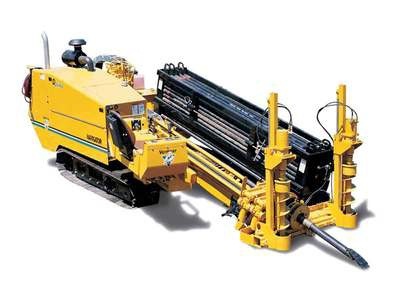

Contact Details
WHITELAND ENGINEERING TECHNOLOGIES PVT. LTD.
GST : 24AAACW2804R1Z3
- M.G. Road, H.R. Thakkar Estate, P.O. Bajwa, Vadodara - 391310, Gujarat, India
- Phone :+917971891212 PIN:( 983 )
 Send Inquiry

Developed and Managed by Infocom Network Private Limited.


